Natural Farming and the Role of Bees: Why Pollination Is Every Farmer's Business
Of all the inputs that go into a crop — seeds, fertiliser, water, labour — one of the most critical is invisible on any input cost spreadsheet. Pollination, delivered free of charge by bees and other insects, is responsible for the reproduction of roughly three-quarters of the world's flowering plants, including a significant proportion of the food crops humans depend on. And it is under serious threat.
The Pollination Dependency Most Farmers Don't Calculate
When we think of pollinator-dependent crops, fruits and vegetables come to mind first — and rightly so. Guava, pomegranate, mango, cucumber, tomato, and dozens of other high-value crops depend heavily or entirely on insect pollination for fruit set. Without adequate pollination, fruits are misshapen, smaller, and fewer — directly reducing the marketable yield.
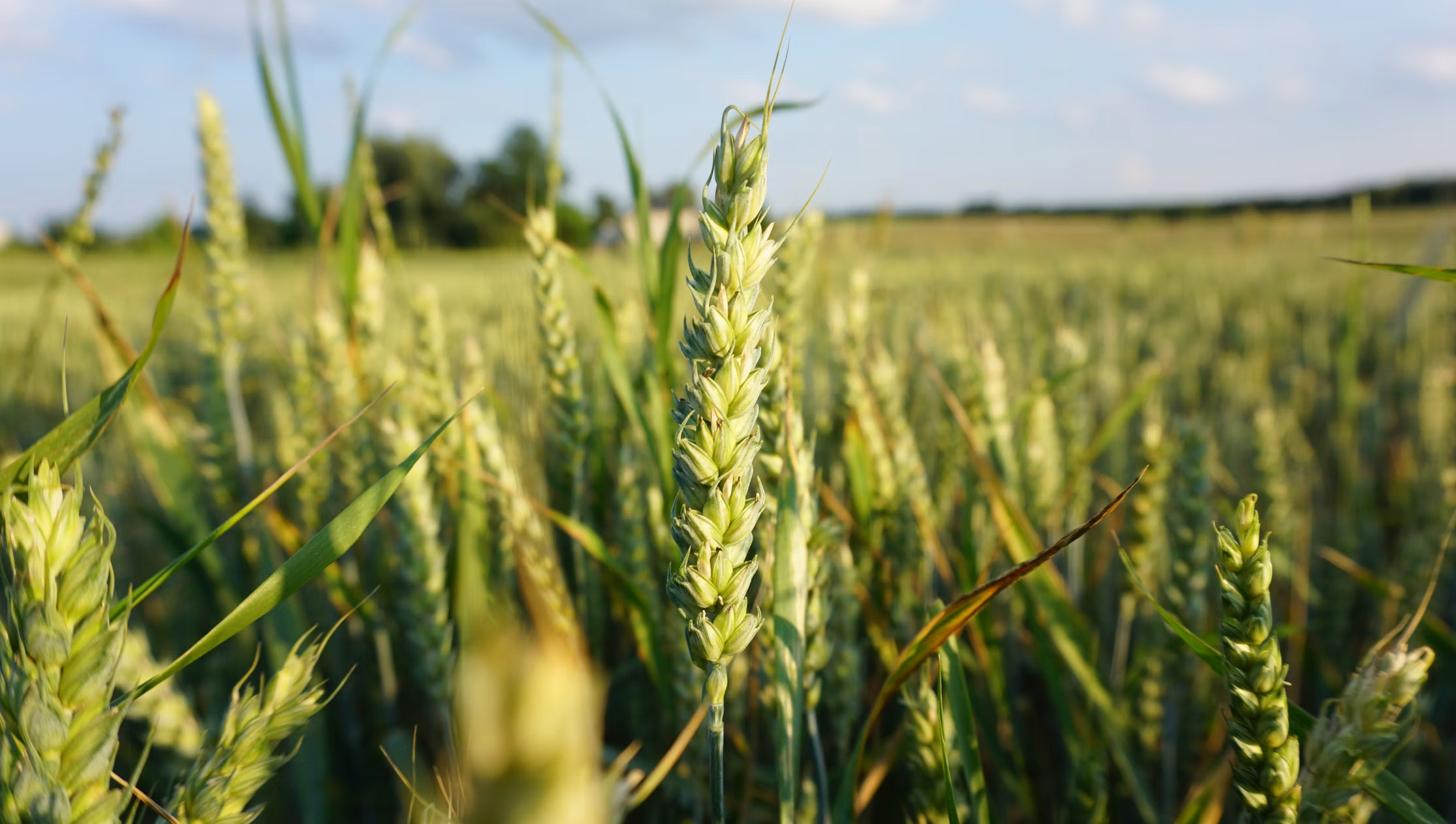
But the dependency runs deeper. Many of the forage crops that support livestock, and the cover crops used in sustainable soil management programmes, also depend on pollinators. Even crops that do not strictly require pollination — like cereals — often share their landscapes with pollinator-dependent plants that form part of the broader ecological balance the farm depends on.
Why Bee Populations Are Declining
The global decline of wild and managed bee populations has multiple causes, many of them directly linked to agricultural practices:
- Pesticide use: Certain insecticides — particularly neonicotinoids — are acutely toxic to bees. Even sub-lethal doses impair navigation, memory, and reproductive success in bee colonies.
- Habitat loss: As farms expand and hedgerows, wildflower margins, and uncultivated areas disappear, bees lose the diverse forage sources they need to maintain colony health across the season.
- Monoculture landscapes: A farm that grows only one crop offers bees forage for a few weeks a year, then nothing. Diverse cropping and non-crop plantings extend the forage season.
- Disease and parasites: Varroa mite and various fungal pathogens have devastated managed honeybee colonies across much of the world.
What Kreevann Does to Support Pollinators
Integrating pollinator support into our farm management is not a charitable gesture — it is self-interest, clearly understood. Our approach includes:
- Maintaining flowering hedgerows and wildflower strips along field margins to provide year-round forage for wild bees
- Restricting the use of systemic insecticides, particularly during crop flowering periods when foraging bees are most at risk
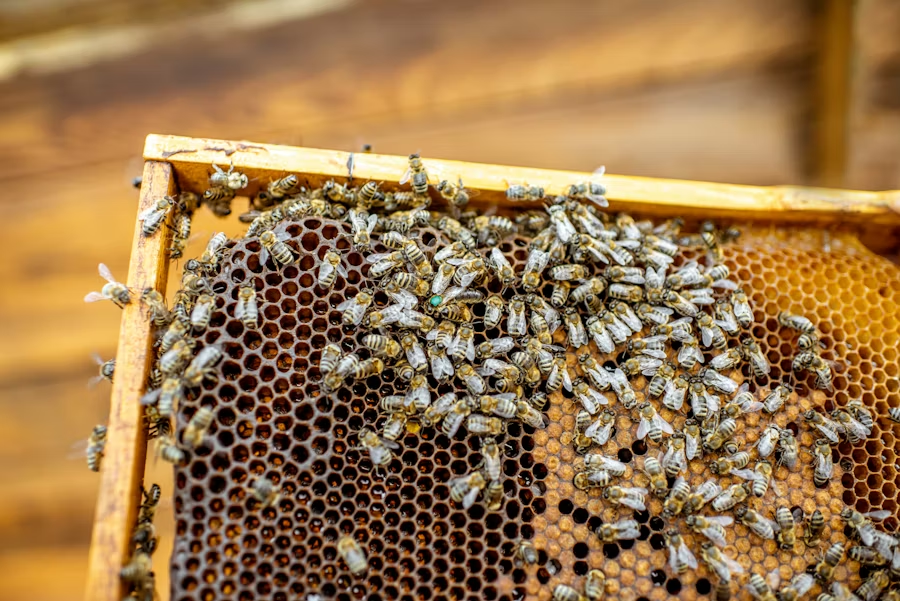
- Working with local beekeepers to place managed honeybee colonies near orchard crops during peak flowering
- Avoiding tillage of field margins where ground-nesting wild bees establish colonies
The Natural Farming Connection
Pollinator health and natural farming philosophy are closely aligned. Natural farming — which minimises synthetic chemical use and emphasises soil biology and ecological balance — creates farm environments that are inherently more hospitable to bees and other beneficial insects.
As we move further in this direction at Kreevann, we see the evidence in our orchards: better fruit set, more uniform fruit size, and less need for manual pollination intervention. The bees are doing their job — because we have made it easier for them to be here.
Every farmer who protects pollinator habitat is investing in a public good that benefits every farm in the neighbourhood. That is the kind of collective action that makes sustainable agriculture possible at landscape scale.
Explore More Insights
Browse all our articles on smart farming, agri-tech, and sustainable agriculture.
Back to Blog