A Day on the Kreevann Farm: What Sustainable Farming Really Looks Like
Sustainability in farming is often discussed as a philosophy or a certification. But for the people who work the land every day, it is simply how you do the job — the habits, routines, and decisions that accumulate over a season into something that either builds or depletes the farm's future capacity. This is what a sustainable farming day looks like at Kreevann.
Before Sunrise: Irrigation Check
The first task of the day begins before first light. Our drip irrigation systems run on timers calibrated to soil moisture sensor readings from the previous evening. The morning check confirms that emitters are functioning, no lines have blocked or burst overnight, and water has reached the intended zones uniformly.
This early check matters because problems caught at 5 AM can be corrected before the heat of the day stresses the crop. An undetected blockage running through the morning can mean a significant patch of under-watered plants — invisible until it is too late to undo the stress.
Morning: Field Walks and Scouting
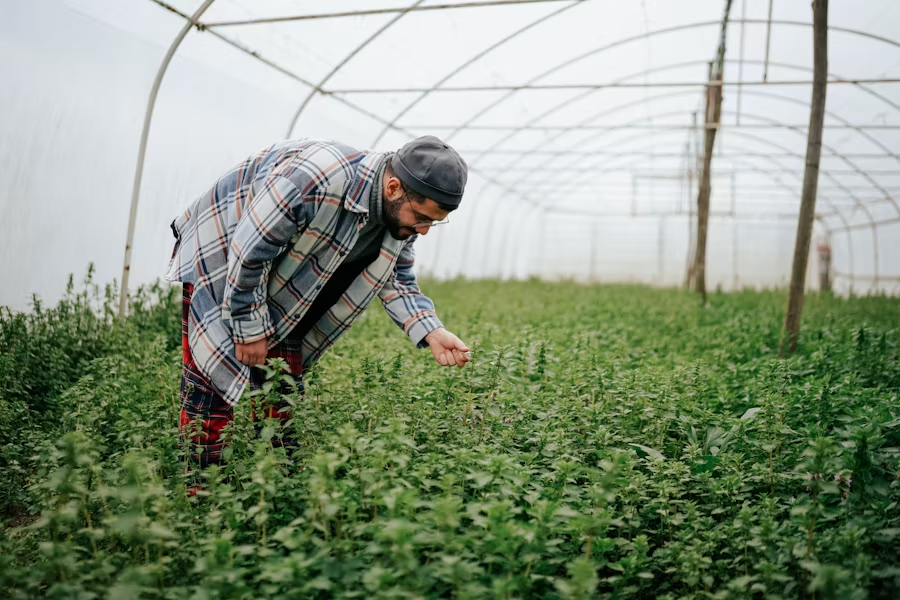
As the sun rises, the field team begins systematic crop scouting. This is not casual walking — it is structured observation: checking leaf colour, inspecting undersides for pest eggs, noting any wilting or unusual growth patterns, recording observations plot by plot.
The data from these morning walks feeds into our agronomist's weekly review. Trends across multiple days tell a more reliable story than any single observation. Is that yellowing confined to one corner, suggesting a drainage issue? Or is it appearing across multiple plots, pointing to a nutrient deficiency?
Midday: Inputs and Applications
Where scouting identifies a genuine need — not a perceived one — targeted applications happen during the cooler morning hours or late afternoon. At Kreevann, we apply the principle of minimum effective intervention: the smallest input that addresses the actual problem, applied precisely where it is needed.
This reduces input costs, limits runoff into the water table, and avoids the resistance build-up that comes from broad-spectrum, routine chemical applications. Our records track every input applied to every plot — data that builds our understanding of what works over time.
Afternoon: Maintenance and Planning
Equipment maintenance happens daily, not just when something breaks. Checking tractor fluid levels, clearing debris from harvester chains, inspecting drip lines for wear — these small acts of prevention prevent the large costs of breakdown at critical moments.
The afternoon is also when the next day's plan takes shape. What does the weather forecast say? Which plots are approaching harvest readiness? Is the pack house scheduled and staffed for tomorrow's picking? Farming at scale requires constant forward planning.
Evening: Records and Rest
At the end of each working day, our field supervisors update the farm management records. Crop stage, observations, inputs applied, weather notes, any unusual events. This discipline of daily recording is what separates a managed farm from a reactive one — and it is what makes continuous improvement possible season after season.
Sustainable farming is not a dramatic transformation. It is the accumulation of thousands of ordinary days, each done a little more carefully than it might otherwise have been.
Explore More Insights
Browse all our articles on smart farming, agri-tech, and sustainable agriculture.
Back to Blog