Farming Together: Why Collaboration Between Farmers Drives Better Outcomes
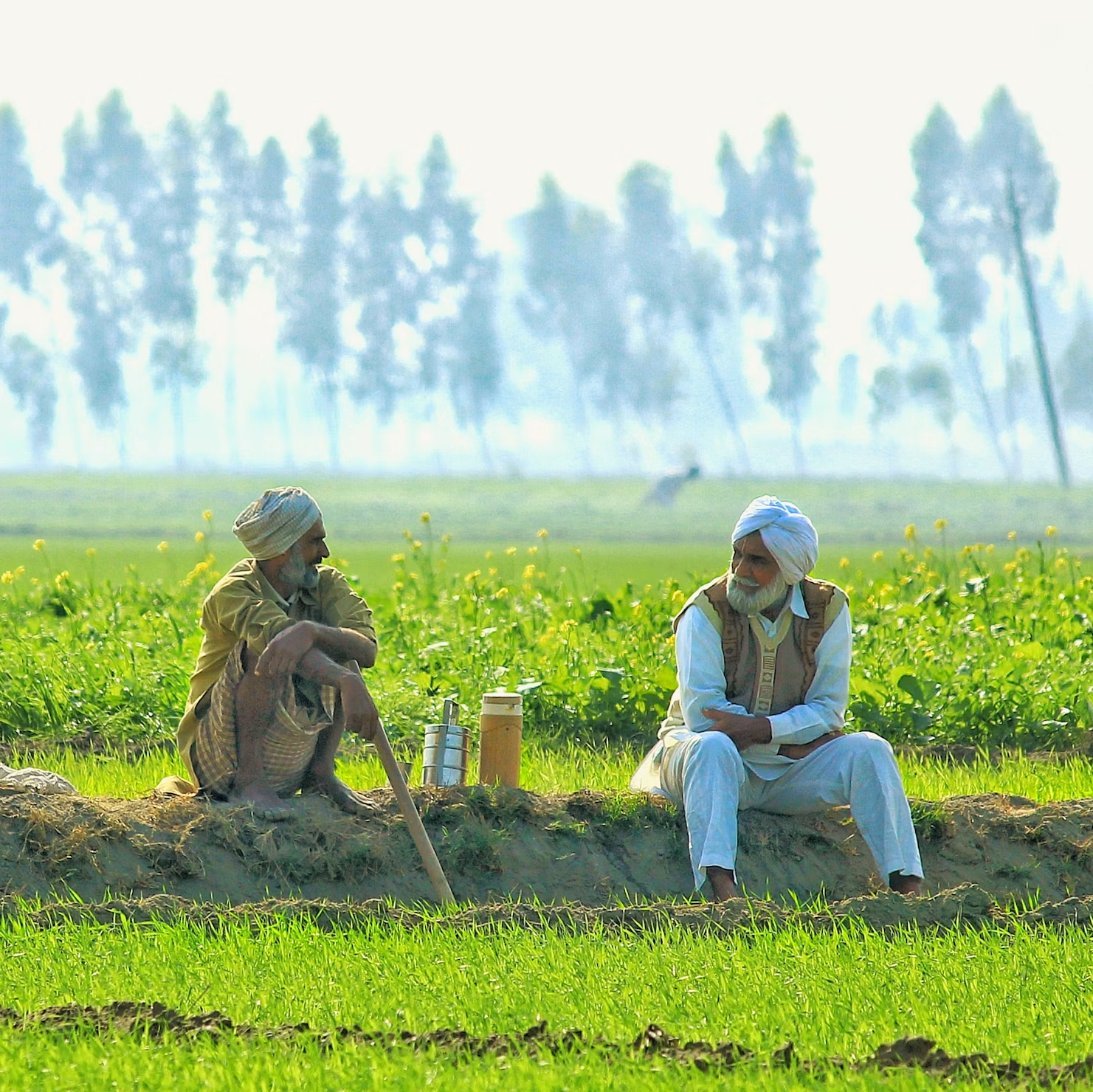
Farming has always been an individual endeavour — each family tending their own land, managing their own costs, selling their own produce. But the economics of modern agriculture are making it increasingly clear that going it alone leaves money on the table. Collaboration between farmers is one of the most powerful levers available to improve livelihoods across India's agricultural sector.
The Isolation Problem
A small farmer selling independently has almost no price negotiating power. Buyers know this, and the farm gate price often reflects it. Meanwhile, the same farmer purchasing inputs — seeds, fertilisers, pesticides — as an individual pays retail prices, while larger buyers receive significant bulk discounts.
This squeeze from both ends makes profitability a constant struggle for smallholders. Collaboration directly addresses both sides of this equation.
What Farmer Collaboration Actually Looks Like
At Kreevann, we have seen collaboration take several forms among the farmers in our supply network:
- Input pooling: Farmers in the same village club together to purchase seeds, fertilisers, and pesticides in bulk, sharing delivery costs and accessing wholesale pricing.
- Equipment sharing: Tractors, harvesters, and sprayers sit idle for much of the year. A shared ownership or rental model means every farmer gets access to the right equipment at the right time without each bearing the full capital cost.
- Knowledge exchange: When one farmer discovers an effective pest management technique or a better sowing density, sharing that knowledge across the group multiplies the benefit.
- Collective selling: Aggregating produce volumes allows farmers to approach larger buyers, process facilities, and export markets that would be inaccessible at individual farm scale.
The Kreevann Model
Our approach is built on partnership rather than extraction. We work with farmers on multi-season planning cycles, provide agronomic guidance, and offer stable offtake commitments — giving farmers the confidence to invest in quality inputs and practices they might otherwise avoid due to market uncertainty.
When farmers know there is a reliable buyer for their produce, they farm better. They take the time to grade carefully, handle produce gently, and plan the next season with confidence. The result is better quality for buyers and better returns for growers — a genuine shared outcome.
Beyond Economics: The Community Dimension
The benefits of farmer collaboration extend beyond the balance sheet. Shared farming activities build social trust, reduce disputes over water and land boundaries, and create support networks that help families through the inevitable bad seasons. Agriculture is cyclical, and communities that face those cycles together are more resilient than those that face them alone.
Explore More Insights
Browse all our articles on smart farming, agri-tech, and sustainable agriculture.
Back to Blog